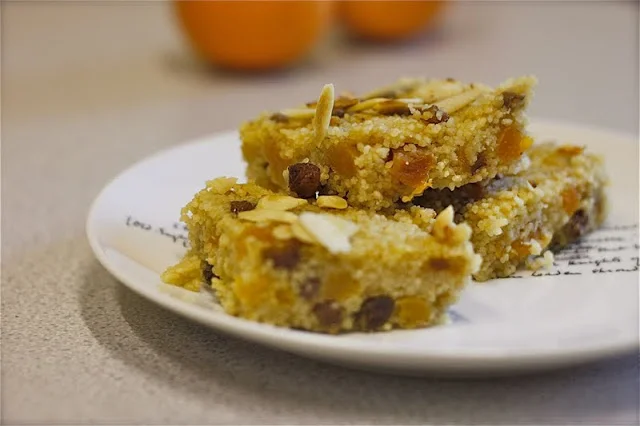
I didn't think this sounded that odd when I first heard about it, but the general reaction from people I know to the concept of a couscous cake has been to turn their nose up, and look at least sceptical, if not downright disgusted. Upon tasting it they are usually pleasantly surprised, but I can't tell if this is just to keep me happy and unoffended, or because they are genuinely sold on the idea of couscous as a dessert. I have to admit I was pleasantly surprised by this cake, and was also told by a couscous-hating friend that "it doesn't really taste like couscous", which apparently is a good thing.
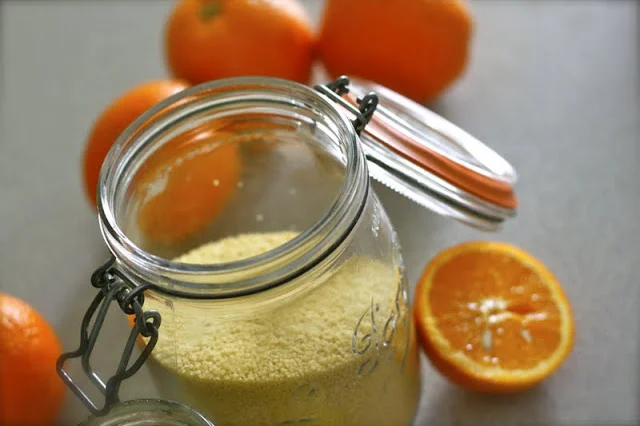
Perhaps it isn't odd to me because during my near-constant perusing and acquiring of Middle Eastern and Moroccan cookery books, I have come across sweet couscous before. Gillie Bhasan's Moroccan cookbook features it, served with nuts, dried fruit, orange flower water and plenty of sugary butter to stop it drying out. I've never tried it, but it's always sounded delicious. Couscous is basically little balls of dough, and you often find sweet doughs, so why shouldn't it work?

Also, I suppose, my favourite way to serve couscous is studded with jewelled dried apricots, sultanas, and sometimes figs or prunes, flecked with pistachios or toasted almonds, and used either to stuff a roast chicken or as a pillow for the delicious juices of a slow-cooked lamb shoulder or fragrant lamb tagine. The sweetness of the grains are a perfect foil for the tender, rich meat, the dried fruit and nuts giving a great contrast in texture. It's only one small step to start serving that couscous without the meat, as a sweet rather than savoury treat.
It also makes sense if you think about polenta cakes, which are all the rage at the moment, I think because they offer the pretence of a healthy dessert, polenta being one of those grain/pulse (I've never known which it is) things that are so lauded for their health benefits. I was having this conversation the other day with someone; one of my pet hates in the world of gastronomy (and believe me, there are many) relates to cakes that purport to be healthy simply because they contain vegetables. Beetroot and chocolate cake, courgette and chocolate cake, even a butternut squash cake I once came across, often appear in cookbooks with a little intro remarking upon their health benefits. Until you look at the ingredients list, and find that the cake still contains exactly the same amount of butter as a normal cake. In fact, these vegetables usually only replace the flour and a bit of the sugar in the cake mixture. A little healthier, yes, as vegetables always will be over flour, but it is misleading to market these cakes as healthy when they still contain oodles of butter - or, in the case of the beloved, nutritious-sounding yet magnificently un healthy carrot cake, vegetable oil.

The same is sort of true for this couscous cake. I came across it in delicious magazine, and the recipe writer had suggested it to be an 'everyday' cake (as opposed to a 'treat' cake) because it contains no refined sugar or fat. Great, I thought. I scanned the ingredients list - dried fruit, couscous, cinnamon, citrus juices - so far so good...and, oh yes, an entire jar of honey.
Now, I accept that honey is marginally better for you than sugar. It's natural. It comes from lovely happy honeybees roaming the country, pollinating as they go, and conjures up idyllic pastoral scenes and also - for me, though I'm not sure why - a sense of nostalgia. It doesn't have the same evil health connotations as the white, granulated stuff that so many nutritionists would have us believe is basically powdered devil horn. I admit, I sometimes find myself feeling a pang of guilt as I weigh out huge mounds of sugar for a dessert or cake; the stuff is just empty calories and does nobody any good. I try to avoid sugar when it's not necessary, only using it in desserts if I have to, and hardly ever using it to sweeten things like fruit compotes or fruit-based desserts, because I like the tartness.
All that said, I did not feel particularly great about pouring an entire jar of honey onto a mound of couscous. In fact, it wasn't a jar, because I halved the recipe to make less cake, but had I made the entire quantity that is what I would have had to do. An entire jar - all 450 grams of it. That's nearly half a kilo of honey. Practically Winnie the Pooh quantities. I appreciate the writer's claim to health benefits because of the lack of refined sugar and any fat (the cake is simply held together by the sweet stuff, no butter or oil required) - yes, it's better for you than a slice of buttercreamy Victoria sponge, but I don't think I'd advocate eating this every day. Unless you have a bad cake habit and are trying to lose weight, in which case swapping your chocolate fudge slice for a bit of this may well be the key.
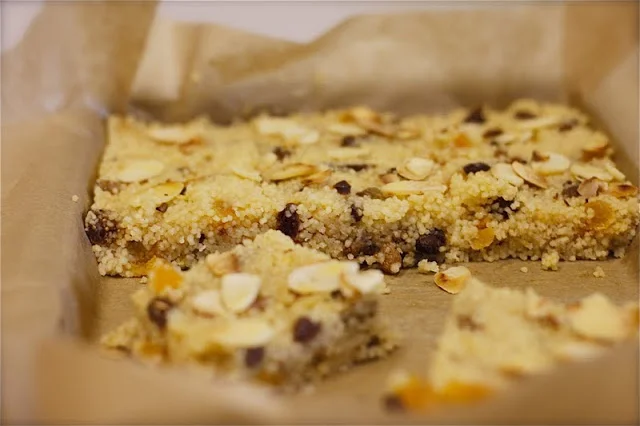
Well, dubious health credentials aside, this cake is very good. It's also probably the laziest cake I have ever made. Chopped fruit (apricots, sultanas and figs) go into a pan with the honey, some cinnamon, and a little orange and lime juice. I also added some orange flower water for that Moroccan fragrance. Once it is all warm and runny, you stir the mixture into some cooked couscous. It makes a wonderfully satisfying sticky, squelchy noise as you stir it around and mix it in. Then you pour it into a greased and lined baking tray, drizzle over a little more honey and some toasted flaked almonds, and leave it to set. As simple as that. It sets fairly solid so can be cut into squares and turned out like brownies.
I wasn't really sure how to serve this. I served it as a dessert twice, accompanied by some sliced oranges drizzled with orange flower water. The sharp fruit is very good against the sweet, sticky couscous - it's such a sweet, rich cake that you need that tartness. Honey somehow makes things more sickly-tasting than just plain sugar, probably because of its caramelly, butterscotch notes. For that reason I'd suggest serving with oranges, or maybe even orange ice cream or lemon sorbet - something tart and fruity. Greek yoghurt was suggested by the recipe, but the thought of yoghurt sets off my gag reflex so naturally I refrained.
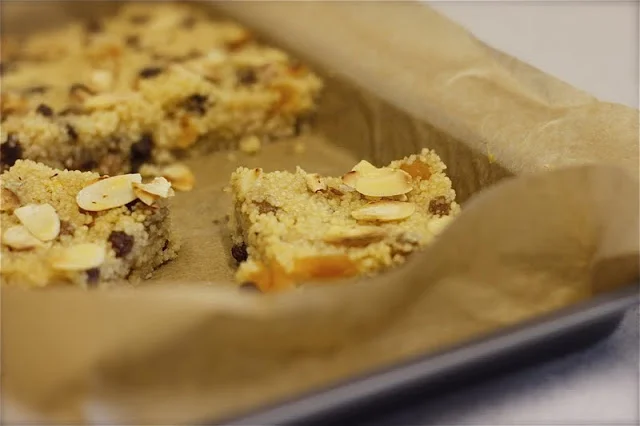
I think the best way to serve this cake, though, is as an alternative to a muesli or cereal bar, or a flapjack. It has a nice chewy texture reminiscent of a health bar, but is much tastier. It would be perfect with a cup of tea or coffee (particularly a strong espresso, because the bitterness would counteract the sweetness nicely) to ward off those mid-afternoon energy slumps. Especially because honey - I think - is better for fluctuating blood sugar levels than plain sugar, which is likely to send you into a stupor within about half an hour. The texture of the couscous and fruit also has a satisfyingly filling quality that I don't think you get from cereal bars.
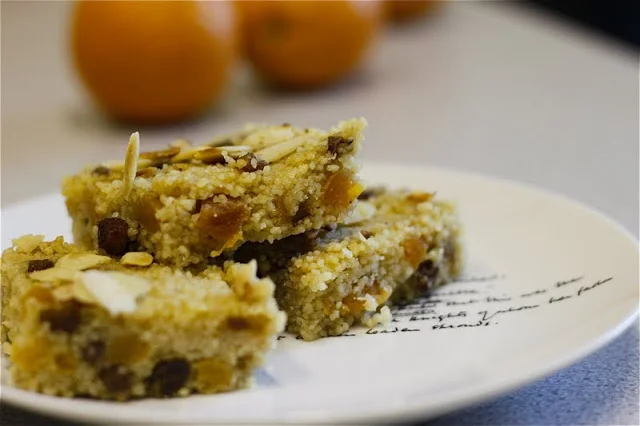
An interesting recipe with lots of potential, I think. Next time I want to try mixing fresh orange juice with sugar to form a syrup and drizzling it over the cake, for the kind of stickiness you get from baklava. I also fancy putting cardamom in it as well as cinnamon, and maybe orange zest to cut through the sweetness. I just love the flavours of Morocco throughout the couscous, particularly the tart dried apricots and the nutty figs. But I'm still not convinced that it can be branded 'healthy'; rather, it should be described as 'a healthier alternative to your usual afternoon piece of sponge cake/chocolate biscuit/muffin'. Also, who cares really about the health benefits - it's tasty.
Sticky couscous cake (makes 15 pieces):
(Adapted from delicious magazine, June 2011 issue).
- 250g couscous
- 100g chopped dried apricots
- 100g sultanas
- 50g dried figs, chopped
- 1/2 tsp ground cinnamon
- 1 tsp orange flower water (optional)
- 2 tbsp lime juice
- Juice of half an orange
- 225g honey, plus a little extra for drizzling
- 2 tbsp toasted flaked almonds
Pour 375ml boiling water over the couscous in a large bowl, cover with a plate, and leave to soak for 10 minutes. Line a shallow baking tray with baking parchment (mine was 28x18cm).
Meanwhile, put the fruit, cinnamon, lime and orange juice, flower water and honey in a pan and heat gently until runny and the fruit has softened a little. Pour over the couscous, stir thoroughly to mix, then pour into the lined tray. Flatten with a spoon.
Drizzle over a little more honey, sprinkle over the almonds, then leave to set. Serve with an orange salad, Greek yoghurt, or ice cream...or as a snack.